
BLOG
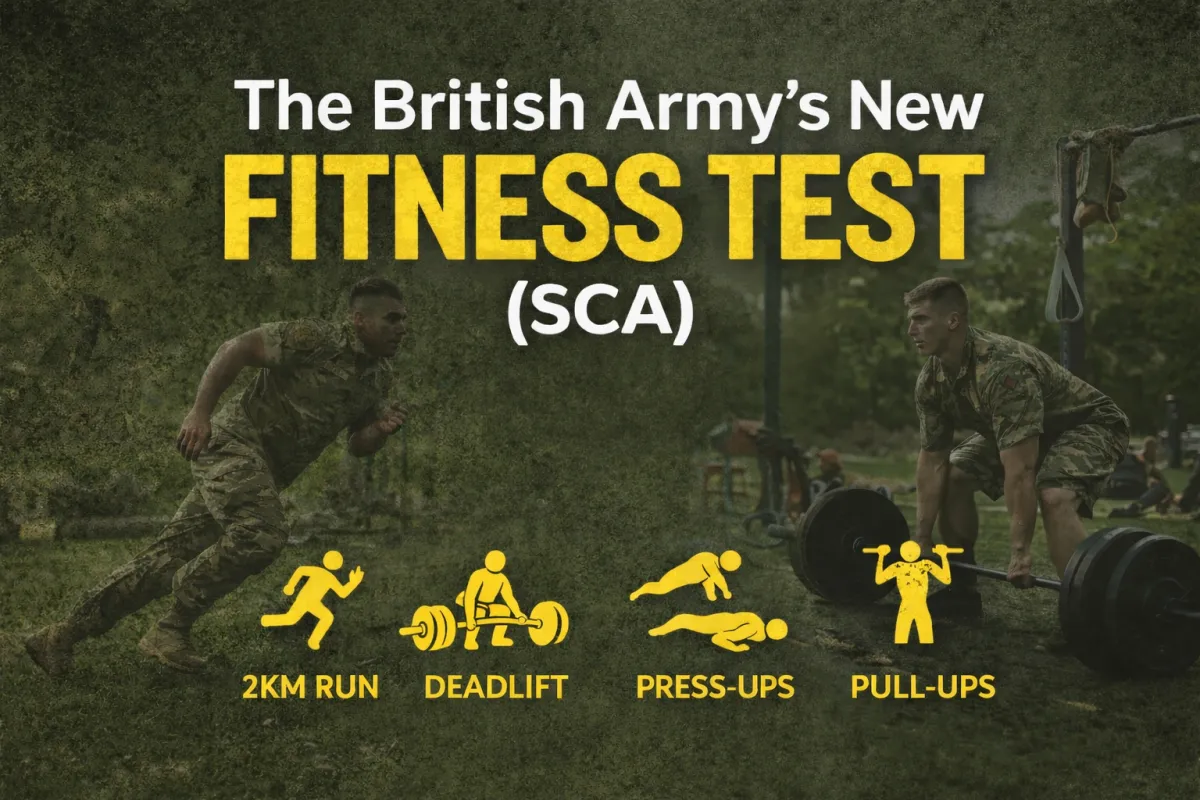
The British Army’s New Fitness Test (SCR)(SCA) — And What It Means
What are the Soldier Conditioning Review (SCR) and the Soldier Conditioning Assessment (SCA)?
There’s a lot of confusion around the British Army’s newer fitness system, mainly because people talk about the SCA as if it’s one single test.
It isn’t.
The system actually works in two stages:
Step 1: SCR (readiness)
Step 2: SCA (performance & progression)
Once you understand that split, everything becomes much clearer.
Step 1: SCR – The Readiness Standard
Before anything else, a soldier is assessed using the SCR (Soldier Conditioning Requirement).
This is the foundation of the system.
At this stage:
It is completely gender-neutral
Everyone is assessed against the same 1–15 scoring chart
It covers the 4 core events:
2km run
Deadlift
Press-ups
Pull-ups
Each result falls into one of three bands:
🔴 Red – below standard, likely requiring intervention
🟠 Amber – acceptable but needs improvement
🟢 Green – good level of physical readiness
This stage is not about medals, rankings or competition.
It answers one simple question:
👉 Are you physically ready to do the job?
It also exposes weaknesses immediately — you can’t hide behind being good at just one event.
Step 2: SCA – Competition, Pride and Progression
Once readiness is established, the SCA builds on top of it.
This is where the system becomes more than just a fitness check.
The SCA introduces:
competition
personal pride
progression over time
Instead of just Red, Amber or Green, soldiers can now achieve:
🥉 Bronze
🥈 Silver
🥇 Gold
🟢 100 Club
At this stage:
Standards are adjusted for age and sex
Performance becomes something to measure and improve
Fitness becomes something to take pride in
How It Works Together
The system is designed to do two different jobs:
First:
SCR = Readiness
Gender-neutral
Identifies weaknesses
Ensures baseline standard
Then:
SCA = Performance
Age & sex adjusted
Rewards higher performance
Drives progression and competition
Why This System Is Better
Older systems focused too much on just passing.
This one does both:
Ensures you are fit enough (SCR)
Pushes you to become better (SCA)
So instead of asking:
“Can you pass?”
It now asks:
“How good are you — and are you improving?”
Test Yourself
Now you understand how it works:
Step 1: SCR – your gender-neutral readiness level (Red, Amber, Green)
Step 2: SCA – your performance standard (Bronze, Silver, Gold, 100 Club)
Use the tool below to check both.
Enter your results and you’ll see:
your lowest SCR level (the limiter)
exactly where you sit on the readiness chart
what you need to improve to reach Green
your SCA standard based on age and sex
👉 This is where you find out:
Are you ready… and how good are you really?
📊 SCA Standards (Real Examples)
🪖 How the SCA is actually conducted
🧪 It’s a max-effort assessment (not pass/fail)
Soldiers complete each event at maximum effort
Their best performance is recorded for each exercise
Results are used to track fitness over time, not just pass a test
👉 This is a big shift:
Old system = pass/fail
SCA = data collection + performance tracking
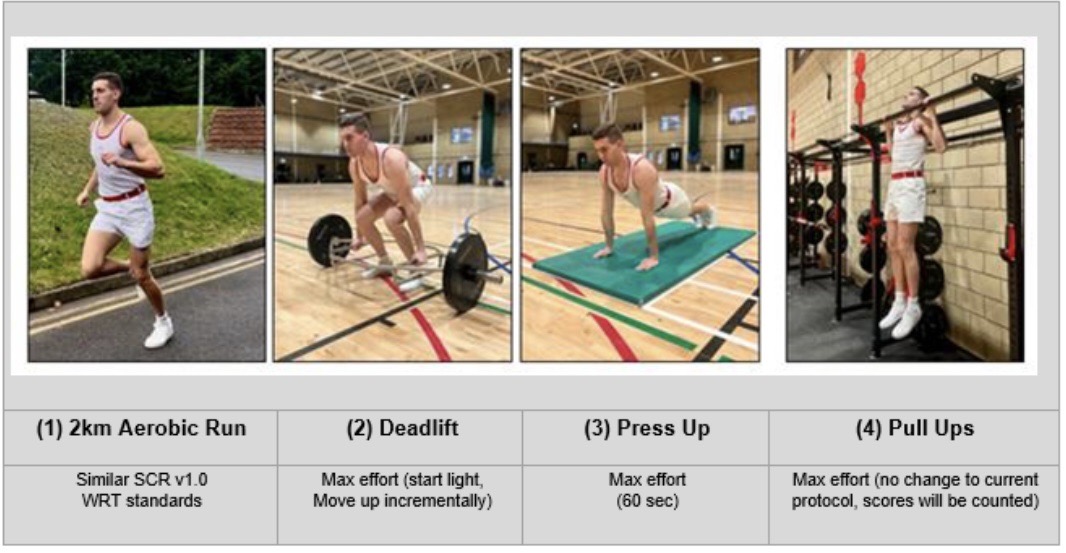
🏃 The 4 events
The SCA consists of:
2km run
Deadlift
Press-ups
Pull-ups
⚙️ How each event is performed
🏃 2km Run
Conducted as a best-effort timed run
Usually outdoors (more realistic conditions)
Tests pacing and aerobic capacity
🏋️ Deadlift
Uses a hex/trap bar
Soldiers perform progressive lifts (increasing weight)
Highest successful lift is recorded
👉 This is key:
It’s not reps — it’s max strength output
💪 Press-ups
Done over a set time period (60 seconds)
Max reps counted
Strict form enforced
🔼 Pull-ups
Performed to max reps
Currently still under review in the system
Soldiers complete as many as possible
🔥 What This Shows
This isn’t easy.
👉 Even Gold level requires:
Solid strength
Good engine
Proper upper body capacity
👉 And 100 Club?
That’s elite-level all-round fitness.
💪 How We Train at Manchester Outdoor Fitness
We already train using these principles:
✔ Strength
✔ Conditioning
✔ Progression
✔ Accountability
👉 Not random workouts — structured improvement.
🚀 Want to Test Yourself?
We run monthly fitness assessments inspired by this style of training.
👉 Come down and see where you stand.
No pressure — just progress.
📍 Get Started
If you want real fitness, not just gym sessions:
🔗 Official British Army Resources
You can paste this directly into your blog 👇
⚠️ Important note
The SCA is currently being trialled and developed by the British Army, with ongoing updates based on performance data and operational requirements.
Final Thought
The system is simple once you see it clearly:
👉 SCR proves you’re ready
👉 SCA shows how good you are
You can’t hide weaknesses anymore.
And real fitness isn’t just about passing —
it’s about improving across strength, endurance and consistency.

TESTIMONIALS




Powered by Military Precision Media © 2024 . Privacy Policy